Everything Pet Food Professionals Need to Know About AAFCO Ingredient Labeling Rules in 2025
For The PET Pros — Petin.AI provides comprehensive insights, regulatory updates, and market trends for professionals across the global pet industry.
Regulatory Framework & Key Authorities
The United States regulates pet food through a multi-agency framework. While the Food and Drug Administration (FDA) and state authorities serve as the primary regulators, other agencies—including the Federal Trade Commission (FTC), U.S. Customs and Border Protection (CBP), and USDA-FSIS—oversee specific areas such as import controls, advertising compliance, and certain animal-derived ingredients.
At the federal level, manufacturers must comply with:
- The Federal Food, Drug, and Cosmetic Act (FD&C Act)
- Title 21 of the Code of Federal Regulations (21 CFR)
- Applicable state regulations aligned with AAFCO model laws
Core Compliance Principle
Manufacturers bear full responsibility for the safety and labeling accuracy of their pet food products.
Although AAFCO is not a regulatory agency, it is the most influential authority in the industry. Its:
- Official Publication (OP 2025 Edition)
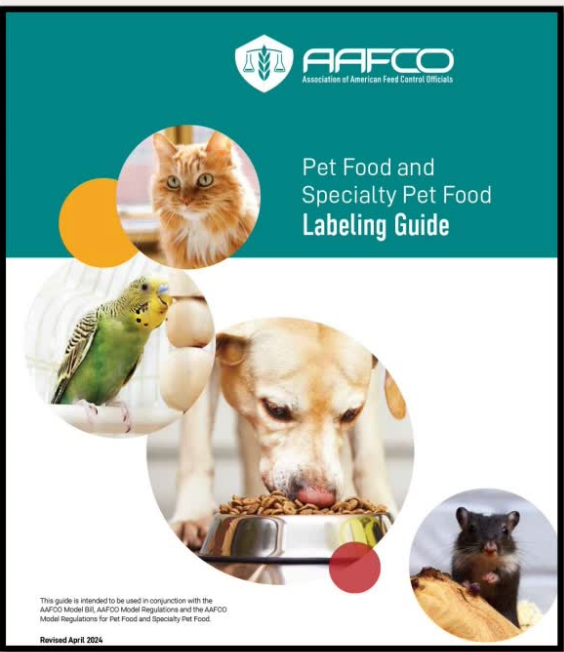
- Pet & Specialty Pet Food Labeling Guide
- Ingredient Definition Standards
- Label Review Checklists
…serve as essential references for achieving U.S. market compliance.
What’s inside the OP 2025 Edition?
- Official ingredient definitions
- Nutritional standards
- Model regulations adopted by most states
- Updated labeling rules
- Contact information for state feed control officials
Core Definitions and Basic Labeling Requirements
Key Terminology
Pet: Only dogs (Canis familiaris) and cats (Felis catus).
Specialty Pets: Non-traditional companion animals (rodents, ornamental fish, reptiles, amphibians, ferrets, hedgehogs, small marsupials, and non-meat rabbits).
Labeling Must Include
- Ingredient Statement: A complete list of all ingredients in descending order of weight.
- Principal Display Panel (PDP): The front-facing retail panel containing core product details (name, weight, species, etc.).
Ingredient Statement Requirements
Formatting Rules
- Must appear as one continuous paragraph
- Ingredients separated by commas
- Only AAFCO-recognized common ingredient names allowed
- No brand names, trade names, marketing claims, or educational explanations
- Uniform font size, style, and color
- Only scientific names of microorganisms may be italicized
Correct Ordering
Ingredients must be listed in descending order by weight (pre-processing), except for vitamin/mineral premixes.
Five Approved Sources for Ingredient Names (Mandatory)
1. AAFCO Official Definitions (OP Chapter 6)
- Must match the OP definition exactly—spelling, structure, species applicability, and technical specifications.
- Index lookups alone are insufficient; the full definition must be reviewed.
2. FDA-Approved Feed Additives (21 CFR 573)
Human food approval ≠ pet food approval.
3. FDA-Approved Color Additives
- Listed under 21 CFR 73 (exempt) and 21 CFR 74 (certified)
- Function must be declared on the label
- Usage limits apply
4. GRAS (Generally Recognized as Safe) Substances
- Some listed under 21 CFR 582 or 584
- Self-affirmed GRAS is possible, but not always accepted by every state
5. Common Food Index (AAFCO Website)
Allows use of widely recognized foods such as blueberries, carrots, peas, provided they are whole, commercially available, and species-safe.
Novel exotic ingredients and human nutraceuticals often do not qualify.
Special Labeling Rules for Sensitive Ingredients
Vitamin/Mineral Premixes
Listed as:
“Vitamins (vitamin E supplement, vitamin A supplement…)”
Meat & Poultry Ingredients
Species must be clear unless from common livestock/poultry:
- “Beef,” “pork,” “lamb,” “goat”
- “Chicken,” “turkey,” “duck,” etc.
Exotics require explicit naming:
“venison,” “kangaroo,” “rabbit by-products,” etc.
Fish Ingredients
May use:
- Generic: “fish”, or
- FDA-recognized names: “salmon,” “ocean whitefish,” “cod”
No dialect or slang species names.
Direct-Fed Microbials (DFM)
Must follow AAFCO Section 36.14 / 96 definitions.
Correct example:
“Dried Bacillus subtilis fermentation product”
Prohibited:
- Listing only microorganism name
- Using fermentation product definitions incorrectly
Enzymes
Must declare source and functional identity:
- Microbial: “Dried Aspergillus niger fermentation extract”
- Plant/animal: “Dried pineapple stem”
Using the ODI Database (Online Database Initiative)
What ODI Provides
- AAFCO OP ingredient names
- CFR regulatory references
- Ingredient lists and custom list creation
- Faster compliance cross-checks
What ODI Does Not Provide
- Usage limits
- Claim substantiation
- Toxicity evaluation
ODI must be paired with OP, CFR, and state-level compliance rules.
Strategic Importance of ODI
ODI is expected to become a centralized evaluation tool for pet food labels for products entering the U.S. market.
The first global ODI training was conducted during the
“AAFCO 2025 U.S. Pet Food Regulatory & Compliance Seminar” in Qingdao on Nov 4, marking an important milestone for professionals.
Common Compliance Mistakes & How to Avoid Them
1. Improper Ingredient Use
Examples:
- Yucca used as a deodorizing agent (not approved for this purpose)
- Garlic used for flea control
2. Prohibited Phrases
- “Natural preservatives”
- “Artificial colors”
These must be replaced with specific ingredient names and functions.
3. Grade/Quality Claims
Not allowed in ingredient statements:
- “Premium,” “Grade A,” “Human-grade,” etc.
4. Abbreviations & Misspellings
Incorrect: “Magox,” “lysine”
Correct: “magnesium oxide,” “L-lysine”
5. Unsafe or Misleading Ingredients
Examples:
- Chocolate in dog food
- Propylene glycol in cat food
- Excessive garlic/onion
- “Natural flavor” used to mask animal by-product powders
Key Compliance Recommendations for Pet Food Manufacturers
1. Regulatory Essentials
- FDA + State Authorities + AAFCO
- Use only approved/defined ingredients
- Labels must be truthful, transparent, and non-misleading
- Reference OP 2025, CFR, and ODI regularly
2. Practical Operational Tips
- Review and align ingredient specifications with suppliers
- Validate all ingredient names against AAFCO definitions
- Conduct periodic internal label audits
- Avoid marketing language within ingredient statements
- Pay special attention to vitamins/minerals, DFMs, enzymes, and color additives
Compliance is the first step toward winning consumer trust and entering the U.S. market.
Petin.AI supports global pet food professionals with real-time regulatory updates and structured compliance intelligence.
Disclaimer
This article is intended for informational purposes only and does not constitute legal advice. Regulatory standards may change, and variations may exist across states. If any data is inaccurate or contains copyrighted material, please contact info@petin.ai for immediate modification or removal.