
Redefining Pet Wellness Through Artificial Intelligence
How AI is transforming pet feeding from a routine task into a proactive health management system, empowering pet professionals worldwide.
“When feeding becomes the starting point of health management, every meal is an opportunity to extend a pet’s lifespan.”
— Petin.AI Industry Insights
The Shift from “Feeding” to “Health Management”
The global pet industry is entering a new phase of intelligent wellness. As pets are increasingly viewed as family members, the focus has evolved from basic care to comprehensive well-being. This “humanization of pets” has accelerated innovation in digital health — and artificial intelligence (AI) now stands at the core of that transformation.
From smart collars that monitor heart rates to AI-powered feeders that detect appetite changes, feeding is no longer a mechanical routine. It’s becoming a data-driven foundation for preventive health care, empowering veterinarians, nutritionists, and pet brands to deliver precision wellness.
The Limitations of Traditional Feeding
Traditional feeding systems — fixed portions, static diets, and manual monitoring — often overlook a pet’s unique biological and behavioral differences. Factors such as breed, age, metabolism, and lifestyle are rarely considered, leading to widespread nutritional imbalances.
Common outcomes include:
- Overfeeding and obesity (affecting nearly 60% of pets in the U.S.)
- Missed early warning signs of chronic diseases
- Inefficient diet management and wasted resources
In essence, traditional feeding is reactive. It responds to symptoms rather than preventing them.
AI as the Game-Changer
AI introduces a paradigm shift by turning feeding data into health intelligence.
Through integrated IoT ecosystems — including smart feeders, collars, and litter boxes — algorithms can now analyze parameters like:
- Food intake and frequency
- Weight fluctuations
- Activity levels and rest patterns
- Hydration and excretion data
This continuous data loop enables AI to create a “digital twin” of each pet — a virtual health profile that learns, adapts, and predicts risks. For pet professionals, this means early intervention and personalized nutrition management at scale.
How AI Reshapes Feeding: From Passive to Proactive
Core Transformation: “Full” to “Optimal”
Instead of focusing on fullness, AI-driven systems emphasize optimal nourishment.
For example, China’s Chongzhiling Tech has developed the Pet Life Universe, an AI ecosystem that customizes feeding strategies for pets with obesity, diabetes, or kidney disease. The model dynamically adjusts portion sizes and nutrient ratios based on daily biometric and activity data, turning every meal into a micro-intervention for better health.
Data-Driven Health Models
AI integrates data across multiple touchpoints — feeder sensors, wearable monitors, and environmental trackers — to build comprehensive “Feeding-Weight-Activity” models.
Chongzhiling’s algorithm, for instance, automatically correlates calorie intake with exercise levels, maintaining pets within their ideal weight range with precision that manual feeding simply can’t match.
Early Disease Detection
Early anomalies — such as reduced playtime without decreased food intake — are red flags that AI can identify within days. These deviations may signal emerging issues like arthritis, thyroid imbalances, or early metabolic disease, prompting timely veterinary attention long before clinical symptoms appear.
Global Case Studies: AI in Action
China: Chongzhiling Tech’s Integrated Ecosystem
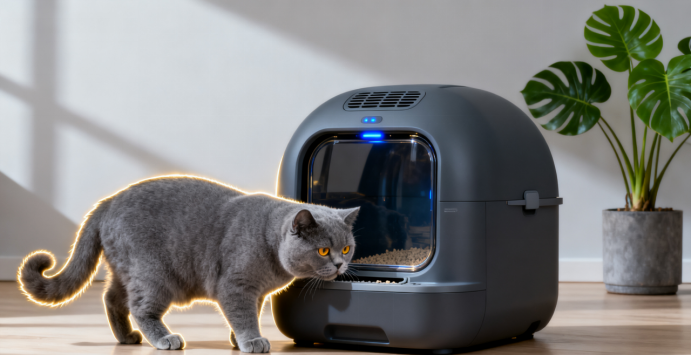
Key Feature: AI-powered smart feeders with visual recognition tracking food portions and leftover patterns.
Impact: Reduced obesity risk by 28%, improved adherence to veterinary diet plans, and minimized human feeding errors.
Israel: PetPace’s Vital Monitoring Collar

Key Feature: Non-invasive biometric sensors tracking temperature, pulse, and respiration.
Impact: Provides 48-hour early alerts for cardiovascular irregularities and infections, enabling preventive care without constant clinical visits.
USA: BistroCat’s AI Wet Food Feeder

Key Feature: Vision-based recognition for multi-cat households, ensuring individualized feeding data.
Impact: Detects appetite changes linked to diabetes or dental problems, allowing for early veterinary diagnostics.
The Tech Behind AI-Driven Pet Care
Multi-Source Data Integration
AI consolidates data from wearables, feeders, and environmental sensors into unified health dashboards, building accurate baselines that evolve with each feeding cycle.
Machine Learning for Predictive Analytics
Advanced algorithms — such as convolutional neural networks (CNNs) — analyze patterns in excretion images or pet vocalizations, detecting health anomalies like urinary tract infections or digestive disorders. Reinforcement learning further enables dynamic feeding adjustments based on ongoing results.
Personalized Outputs
The result is a feedback system that issues real-time, actionable insights:
- “Potential kidney stress — adjust protein ratio.”
- “Reduced activity detected — review calorie intake.”
- “Hydration imbalance — encourage fluid intake.”
For pet owners and professionals alike, these insights translate into precision care and early action.
AI in Action: Tackling Obesity and Diabetes
Obesity Management
AI calculates individualized caloric deficits and adjusts feeding schedules based on activity monitoring. Research shows that AI-assisted nutrition plans can extend pet lifespans by up to two years, aligning closely with trends in human personalized nutrition.
Diabetes Monitoring
AI-driven systems monitor hydration and urination frequency, detecting a 20% increase in drinking behavior — a classic early indicator of diabetes. This data-driven alert system helps ensure timely veterinary consultation and treatment.
Market Growth
The global pet obesity management market is projected to grow by over 8% CAGR through 2030, with startups like Ollie, FitBark, and Sure Petcare using AI to develop precision feeding ecosystems. These solutions are quickly becoming part of everyday veterinary care protocols.
The Future of Preventive Pet Care
Next-Gen AI Applications
Emerging technologies are pushing boundaries further — integrating genetic data, environmental context, and even AR-guided vet interfaces. The vision: “Virtual Vets” capable of real-time diagnostics and personalized wellness guidance accessible through home devices.
Ethical Considerations
As AI becomes central to pet health, data privacy and algorithmic transparency are critical. Petin.AI advocates for explainable AI and secure data protocols, ensuring that innovation serves both pets and people responsibly.
Conclusion
Artificial intelligence is reshaping pet care — turning routine feeding into a predictive, preventive, and personalized experience.
For pet professionals (For The PET Pros), these technologies open new pathways to enhance pet wellness, client trust, and business efficiency.
As AI bridges the gap between feeding and health management, one truth emerges: the future of pet care is not reactive — it’s intelligent.
Disclaimer: This article is for informational purposes only. Data and case studies are drawn from public and industry sources. For corrections or copyright concerns, please contact info@petin.ai